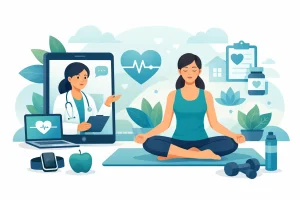
A lot can happen in a focused wellness conversation before anyone ever steps into an office. Patterns show up. Energy issues start to make sense. Supplement routines get cleaned up. Nutrition gaps become obvious. That is why the real question is not simply is telehealth good for wellness, but whether it can deliver the kind of personalized guidance people are actually missing.
For many people, the answer is yes – with the right practitioner, the right process, and the right expectations. Wellness care is not always about needing a hands-on procedure or a quick prescription. Often, it is about taking the time to look at the whole person, review history carefully, assess symptoms in context, and create a strategy that fits real life. Telehealth can do that very well. But it is not magic, and it is not the answer to every situation.
Is telehealth good for wellness support?
When wellness care is individualized, telehealth can be extremely effective. A meaningful wellness consultation depends on listening well, asking better questions, reviewing labs, understanding lifestyle patterns, and connecting the dots between symptoms, habits, stress, nutrition, sleep, and long-term goals. None of that requires a rushed waiting room experience.
In fact, many wellness conversations are better in a virtual setting because people are more relaxed at home and more likely to speak honestly about what is really going on. They can pull out supplement bottles, talk through food routines in their own kitchen, or discuss daily stress in the environment where they actually live it. That kind of context matters.
For people looking for naturopathic guidance, longevity support, nutrition planning, supplement recommendations, or deeper insight into chronic wellness concerns, telehealth can create a direct line to experienced care without geography becoming the main obstacle. It also makes continuity easier. A wellness plan works better when there is follow-through, adjustment, and access.
Where telehealth works especially well
Telehealth is a strong fit when the goal is strategic wellness planning rather than emergency care. If someone wants a comprehensive review of symptoms, current routines, health goals, previous lab findings, supplement use, or long-term concerns like fatigue, inflammation, digestion, sleep disruption, hormone imbalance, or stress overload, a virtual consultation can be highly productive.
This is also true for clients who feel stuck with generic advice. Many people have already been told to eat better, exercise more, sleep more, and reduce stress. That is not wrong, but it is incomplete. Real wellness care gets specific. It asks why energy is low, why recovery is poor, why focus is off, why digestion changes, why a person is gaining weight despite effort, or why they feel like they are doing everything right and still not feeling well.
Telehealth gives room for that kind of personalized evaluation. It allows a practitioner to spend time reviewing the bigger picture instead of reducing everything to one isolated complaint. That is where progress usually starts.
Telehealth is often ideal for ongoing guidance
Wellness is rarely a one-visit issue. People need plans that evolve. They need someone to review what is working, what is not, what changed after new supplements, what improved with nutrition shifts, and what still needs attention. Virtual follow-up makes that process easier and more consistent.
That matters because healing and optimization are not static. Needs change based on age, stress, season, hormones, work demands, travel, family life, and underlying health patterns. A telehealth model can support regular check-ins without requiring the time and logistics of constant office travel.
Where telehealth has limits
Anyone speaking honestly about this topic should say it clearly – telehealth has boundaries. It is good for many aspects of wellness, but not all of them.
If a person needs a physical exam, imaging, urgent intervention, or a procedure, telehealth is not the full answer. If symptoms suggest an acute medical issue, severe instability, or something that requires immediate in-person evaluation, virtual care should not be stretched beyond its purpose. Good practitioners know when to work virtually and when to direct someone toward hands-on assessment.
That does not weaken telehealth. It strengthens it. A strong wellness model respects what can be done well online and what cannot.
Some clients also prefer in-person interaction because it feels more grounding or personal. That is valid. Others are not comfortable with technology or do not have enough privacy at home for a focused consultation. In those cases, telehealth may be less effective, not because the care is inferior, but because the environment is.
What makes telehealth effective for whole-person wellness
The biggest factor is not the screen. It is the quality of the practitioner and the depth of the process.
A generic telehealth appointment that lasts a few minutes and follows a script is not real wellness care. It may be convenient, but convenience alone does not create results. For wellness work to be effective, the practitioner has to look beyond surface symptoms and build a plan around the individual.
That means reviewing history in detail, discussing nutrition honestly, looking at stress patterns, understanding sleep, exercise, mindset, and spiritual depletion, and considering labs or targeted testing when appropriate. It also means giving clear, usable recommendations instead of vague encouragement.
This is where a personalized naturopathic model stands apart. Wellness is not one-size-fits-all. Two people with the same symptom may need entirely different strategies based on age, gender, genetics, lifestyle, medication history, deficiencies, or underlying imbalances. Telehealth can support that level of personalization very well when the practitioner knows how to lead the process.
Communication matters more than ever
Virtual care only works when communication is strong. People need clarity. They need to know what to do, why they are doing it, what to watch for, and when to follow up. They also need a way to ask questions when life happens and plans need adjustment.
That is why telehealth should not feel cold or transactional. In a strong wellness practice, virtual care still feels personal. The client should feel seen, heard, and guided, not processed.
For many people, that access is a major advantage. They may live in an area with limited holistic options. They may travel often. They may be balancing work, parenting, and a health issue that has already drained too much time and energy. Telehealth can remove friction and help them stay engaged with their wellness plan.
Is telehealth good for wellness if you want root-cause answers?
It can be, especially when the work centers on careful evaluation and pattern recognition. Root-cause wellness is not about chasing symptoms one at a time. It is about understanding why the body is struggling, adapting poorly, or sending repeated signals that something is off.
A virtual consultation can be a strong setting for that kind of work because it gives space for in-depth conversation, review of history, lifestyle analysis, and lab interpretation. If a practitioner is experienced in connecting those factors, telehealth can move the process forward in a very meaningful way.
What it cannot do is replace every form of in-person assessment. Root-cause care sometimes needs both. A virtual evaluation may identify likely drivers and next steps, while in-person testing or examination may provide additional information. These are not competing models. Used wisely, they complement each other.
That is very much the approach at 21st Century Total Wellness. The goal is not to force every client into one format. The goal is to meet the person where they are, evaluate the whole picture, and provide individualized guidance that is practical, grounded, and built around real healing.
Who benefits most from telehealth wellness care
People who tend to get the most from telehealth are those who want more than surface-level advice. They are ready to talk through patterns, review routines honestly, make targeted changes, and stay engaged in the process. They do not want generic care. They want personalized direction.
This includes adults focused on energy, longevity, immune resilience, hormone balance, digestion, supplement strategy, healthy aging, and deeper understanding of unresolved symptoms. It also includes people who have already tried piecing things together on their own and realize they need experienced guidance to stop guessing.
The best results usually come when telehealth is treated as a serious clinical conversation, not a casual check-in. Come prepared. Know your questions. Have your supplements, labs, timeline, and symptoms organized. Be open. That level of engagement helps a skilled practitioner do meaningful work.
Telehealth is not a shortcut to wellness. It is a delivery model. If the care itself is thoughtful, individualized, and rooted in experience, it can be a very powerful one. And for many people who are ready for real answers, real strategy, and real support, that is exactly what makes it worth it.
Leave a Reply