
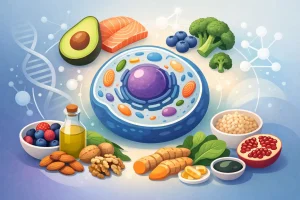
You can take the best supplement on the shelf and still miss the mark if your daily food choices are working against your cells. When patients ask about the best foods for cellular health, I do not start with trendy powders or one-size-fits-all plans. I start with what your cells need every single day – stable blood sugar, clean proteins, healthy fats, minerals, antioxidants, and a diet that lowers the burden of inflammation instead of feeding it.
Cellular health is not a vague wellness phrase. It is the foundation of energy production, repair, detoxification, hormone signaling, immune balance, and healthy aging. If the cell is underfed, inflamed, oxidatively stressed, or overloaded with toxins, the whole body pays for it. That can show up as fatigue, brain fog, slower recovery, poor metabolic function, skin issues, and the feeling that your body is not operating the way it should.
What makes the best foods for cellular health?
The best foods for cellular health do a few things well. They provide nutrients your mitochondria can use for energy, they protect membranes from damage, and they help your body manage inflammation and oxidative stress. They also support the gut, because poor digestion and poor absorption often sit behind nutrient deficiencies that affect the cell level.
This is where personalized care matters. A food that is healthy on paper may not be the right fit for your system if you have blood sugar instability, histamine issues, digestive dysfunction, autoimmune concerns, or a food sensitivity. That is why experienced naturopathic guidance matters more than generic internet lists.
12 best foods for cellular health
1. Wild-caught salmon
Salmon earns its place because it brings high-quality protein and omega-3 fats in one package. Your cells depend on healthy fats to build flexible, functional membranes. Omega-3s also help regulate inflammation, which matters if you are dealing with joint discomfort, cardiovascular concerns, or recovery issues.
Not everyone needs salmon every day, and some people do just as well rotating in sardines or mackerel. The key is consistency. If your diet is heavy in processed seed oils and low in omega-3s, your cells are fighting an uphill battle.
2. Pasture-raised eggs
Eggs are one of the most efficient whole foods for cellular support. They provide protein, choline, selenium, B vitamins, and fat-soluble nutrients that play a role in brain health, methylation, membrane function, and detox pathways.
They are not ideal for every person. Some individuals with sensitivities or certain inflammatory conditions may need a trial break. But for many adults, eggs are one of the most practical and affordable foundational foods.
3. Blueberries
Blueberries are rich in polyphenols, which help defend cells from oxidative damage. They support healthy aging, vascular function, and brain performance. In practice, they are one of the easiest foods to add for people who want better nutrition without overcomplicating their routine.
Fresh or frozen both work. The trade-off is portion size. Even healthy fruit should fit your metabolic picture, especially if you are working on insulin resistance or blood sugar swings.
4. Leafy greens
Spinach, arugula, kale, romaine, collards – these are nutrient-dense foods that deliver folate, magnesium, potassium, carotenoids, and plant compounds that support detoxification and cellular repair. They also help correct one of the most common problems in modern nutrition: not enough mineral-rich plant intake.
Greens are powerful, but they are not magic on their own. If you are under-eating protein or overloading processed foods, a salad will not rescue your cellular health. It has to be part of a broader strategy.
5. Cruciferous vegetables
Broccoli, cauliflower, Brussels sprouts, cabbage, and bok choy deserve special attention because they support detox pathways and provide compounds that help the body process hormonal waste and environmental stressors. That matters at the cellular level, especially in a world full of chemical exposure.
Some people with thyroid issues or digestive sensitivity tolerate cooked cruciferous vegetables better than raw. That is a good example of why nutrition should be adjusted to the individual, not forced through a rigid rulebook.
6. Avocados
Avocados provide monounsaturated fats, fiber, potassium, and antioxidant support. They help nourish cell membranes and support metabolic health without pushing blood sugar in the wrong direction. For many adults, they are a strong replacement for low-quality processed fats.
They are calorie-dense, which is not a problem for everyone. It simply means portion awareness matters if body composition is one of your goals.
7. Extra virgin olive oil
A high-quality olive oil is one of the simplest upgrades you can make. It brings anti-inflammatory polyphenols and stable fats that support cardiovascular and cellular function. This is not the same as highly refined oils used in processed foods.
Quality matters here. Cheap olive oil is often not what people think it is. Used well, olive oil is a daily tool for supporting the cell, especially when it replaces inflammatory fats in the diet.
8. Walnuts
Walnuts provide healthy fats, minerals, and plant compounds that support the brain and cardiovascular system. They are useful for people who need a portable whole-food option that supports satiety and steadier energy.
As with all nuts, quantity matters. A small serving can help. Mindless snacking can create excess calorie intake and digestive stress in some people.
9. Fermented foods
Unsweetened yogurt, kefir, sauerkraut, kimchi, and other fermented foods can support the gut microbiome, and that has direct effects on cellular health. If digestion is weak, inflammation tends to rise and nutrient absorption tends to fall. Your cells cannot thrive if the digestive system is underperforming.
This category is highly individual. Some people do very well with fermented foods. Others with histamine intolerance or gut irritation may need a different approach.
10. Grass-fed beef
When used strategically, grass-fed beef can be a strong source of protein, iron, zinc, B12, and amino acids needed for tissue repair, detox support, and energy production. This is especially relevant for people who are depleted, under-muscled, or struggling with fatigue.
The quality of the meat matters, and so does the person eating it. Some people do better with more fish and poultry. Others need more red meat than they have been told. Lab work, symptoms, and history help clarify that.
11. Garlic and onions
These foods bring sulfur compounds that support detoxification, circulation, and immune function. Sulfur is important for glutathione production, and glutathione is one of the body’s major cellular defenders against oxidative stress.
If you have digestive sensitivity, raw forms may be too much. Cooked versions are often easier to tolerate and still offer meaningful benefits.
12. Green tea
Green tea is not a food in the strict sense, but it deserves a place here. It provides catechins that support antioxidant defense, metabolic health, and cellular resilience. For many adults, replacing sugary drinks with green tea is a practical move that improves their daily health load.
Caffeine tolerance varies. Some people thrive with it, while others do better limiting intake, especially if sleep or adrenal stress is already an issue.
Foods that work against cellular health
If you want better cells, you need to look at what is damaging them too. Ultra-processed foods, excessive sugar, deep-fried foods, alcohol overload, and constant overeating create oxidative stress and inflammation. That does not mean a person can never enjoy a meal out or a dessert. It means the pattern matters more than the exception.
A body can recover from occasional indulgence. It struggles when the daily routine is built around low-quality oils, additives, nutrient-poor calories, and blood sugar chaos.
Why personalization matters more than a perfect food list
This is where people often get frustrated. They read about the best foods for cellular health, clean up their diet, and still feel stuck. That usually means there is more going on beneath the surface – poor digestion, low stomach acid, mineral depletion, toxin burden, hormone imbalance, chronic stress, mitochondrial dysfunction, or lab markers that need deeper interpretation.
A personalized wellness evaluation can uncover what your body actually needs instead of guessing. In my experience, real progress happens when nutrition, supplementation, lifestyle strategy, and targeted support are aligned with your age, history, symptoms, and goals. That is the difference between a food list and a plan.
At 21st Century Total Wellness, that individualized approach is central. The right foods matter, but the right foods for you matter more.
How to start without overcomplicating it
Start by building meals around clean protein, vegetables, healthy fats, and better blood sugar balance. Replace processed oils with olive oil or avocado. Add berries instead of refined sweets. Eat leafy greens and cruciferous vegetables several times a week. Rotate in salmon, eggs, walnuts, and fermented foods based on your tolerance.
Then pay attention. Energy, digestion, sleep, cravings, mental clarity, and inflammation tell a story. If those areas are not improving, do not assume you need more willpower. You may need a more skilled, individualized strategy.
Your cells are listening to every meal you eat. Feed them with intention, and the body often starts responding in ways that feel steady, measurable, and real.
Leave a Reply